Mini project Development
Project Learning Method
This method emphasizes nurturing the whole child by developing the five senses with hands-on learning experiences that involve skills and art.
Teachers create conditions for children to be interested in learning, leading them to think critically and creatively. Depending on the topic of the project. Children participate in projects to solve real-life problems and explore new topics.
Characteristics of the Project Approach:
• Students are active learners and acquire knowledge about the world around them through practical experiences.
• This method focuses on creativity and imagination rather than academics.
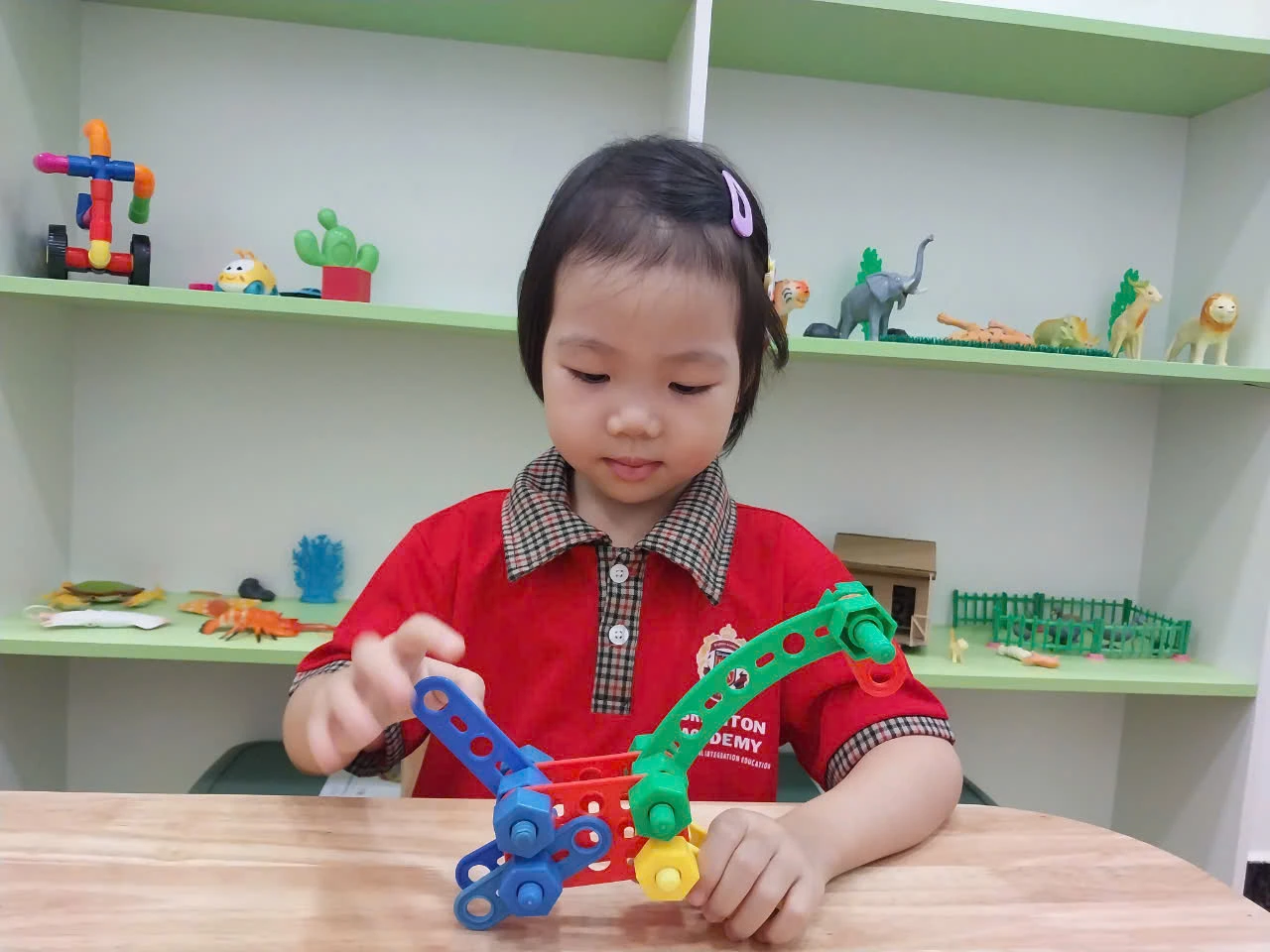
• The Project Approach has some similarities with learning through play. That is, it advocates teaching children lessons through practical activities such as building blocks, playing with clay, baking, gardening, etc.
• Preschoolers often work in non-competitive group environments. It is up to the child to decide whether to learn by using hands-on methods or through observation.

Environment
Teaching children from the smallest daily actions
Protecting the environment does not require doing big things, but only by small actions in daily life below:
1. Teach children to save electricity and water:
The daily actions that children see have a great impact on children's awareness. Children are very easy to imitate and form awareness and habits. Therefore, parents should teach children to turn off the lights before leaving the room, turn on the faucet just enough to save electricity and water. In addition, using paper economically will also contribute to protecting trees, one of the factors that help keep the environment clean.
2. Classify and dispose of garbage in the right place
Every family releases a lot of waste into the environment every day, but people still have the bad habit of not classifying waste and disposing of garbage in the wrong place. Children are very susceptible to this bad habit from adults. Therefore, parents should teach their children how to handle waste right now, classify recyclable waste, non-recyclable waste and throw it in the right place.
In particular, when children throw garbage in the wrong place, parents should gently point out that the action is not good, helping children realize that they need to protect the environment through their daily actions.
3. Always praise and support children in taking action for the environment
When children take actions to protect the environment, parents should give them praise and encouragement to make them more interested. Parents should not do everything for their children but accompany them. For example, take out the garbage with them, plant trees with them. This will help children realize how meaningful their actions are to the environment.

Trees
The project “Children love trees” is part of the STEM program. In order to help children love nature more, understand the rich and diverse world of plants, as well as bring interesting and positive learning experiences; thereby nurturing children's passion for learning, as well as helping children develop physically, move and work proactively according to the project plan, the large kindergarten block at Brighton Academy has built the STEM project “Children love trees”.
When implementing the project, children had many experiences: Observing trees in the school yard, school garden, measuring the size of tree trunks, planting and caring for trees, drawing pictures of children protecting the environment and designing smart watering cans...
To kick off the project, teachers and children talked and explored stories about trees: “What do you know about trees”, what do you want to know more about trees? Name the types of trees that you already know? What do trees need to grow and develop. Do you know how trees are beneficial? What should we do to have more trees? ....

Implemented projects

14
Little Chef Project
TH12

14
Children love green environment
TH12

14
Beautiful Salon
TH12

07
I want to become a Doctor
TH12

16
Future Scientist
TH11

16
Environment
TH10

 Vietnamese
 Facebook
 Zalo
Zalo

Brochure